Back in March and April this year, I was delighted to take part in two sets of Live shows. The first was a live show at the famous BBC Radio Theatre at its historic Broadcasting House location in central London. It was both a live show in the sense that we have a live audience in the room with us as we were recording the show, but also a pre-record in the sense that the show was also then going to be edited and broadcast later. That show was Natalie Haynes Stands Up for Classics and I was one of her guests, alongside Alicia Stallings, to talk about the show’s topic: Delphi. It’s going live on Radio 4 in August 2026 – and hope you will tune in: https://www.bbc.co.uk/programmes/m003012x
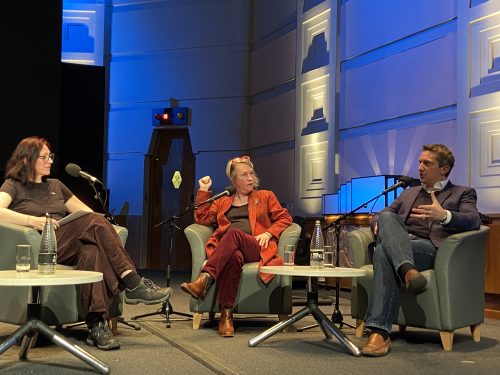
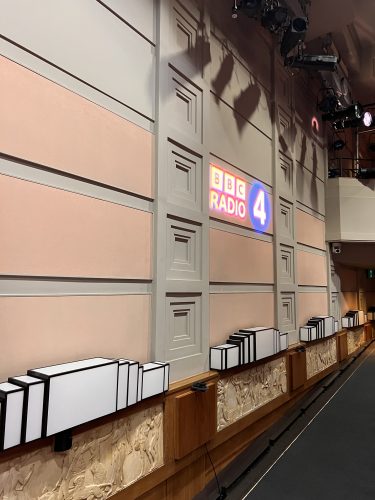
One of the things that amazed me was the commitment of the live audience. Many had been queuing outside Broadcasting House for between 2 and 3 hours to secure a seat inside the Theatre for a roughly 1 hour recording process. Many of course are diehard Natalie fans (and I would count myself in that category because she’s ace) and come regularly for Stands Up for Classics recordings. They told me it was a great way to learn more about the ancient world, as well as feel part of the programme (their laughs and applause will feature!), as well as seen behind the curtain a little for how the show is put together. The second thing that amazed me was the beauty of the art deco radio theatre itself, with such attention to detail in a space that was designed for radio recording. It felt a shame, while we were sitting there discussing Delphi, that we could not also share the setting and beauty of it with the audience. Perhaps an episode on the history, architecture and design of the Radio Theatre (and all the Classics that have inspired it/ it has heard) might be in order Natalie? It may have to wait a bit – the Radio Theatre shut the day after we recorded (not our fault we promise!) It’s had an overhaul planned for some time so that the beautiful art deco space can continue to delight for years to come.
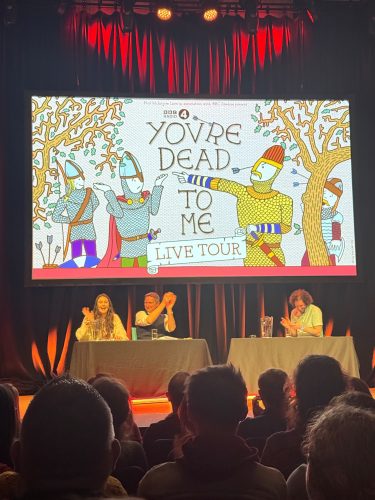
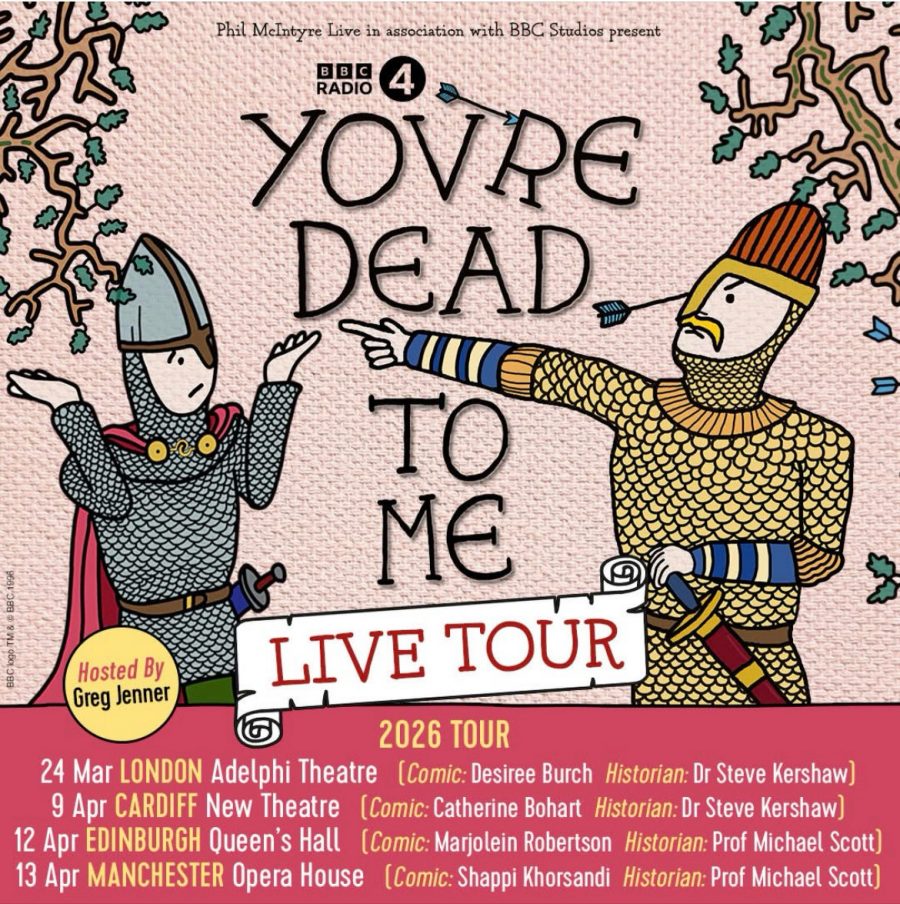
The second experience in April was to work with Greg Jenner on the first ever Live Tour show versions of You’re Dead to Me. YDTM is close to my heart as I recorded the pilot episode with Greg on the Spartans back in the day – during which we came up with the show’s title – and have been a participant many times in different episodes. Back in 2020, it was planned to have a live tour, which I was going to be the historian for, and tickets were on sale but then something happened… what was it again.. Ah yes Covid – and plans had to be shelved. I was so delighted when Greg got in touch not only to tell me that 6 years later the live tour was going to happen, but that it was picking up the same theme that had been planned back in 2020, and that they still wanted me to take part. As a result we took YDTM: Alexander the Great to live shows in Edinburgh and Manchester, with a second team doing the shows in London and Cardiff.
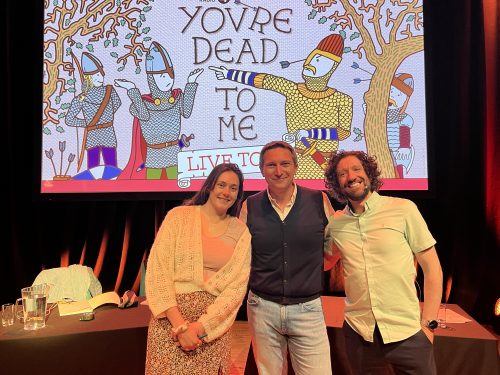
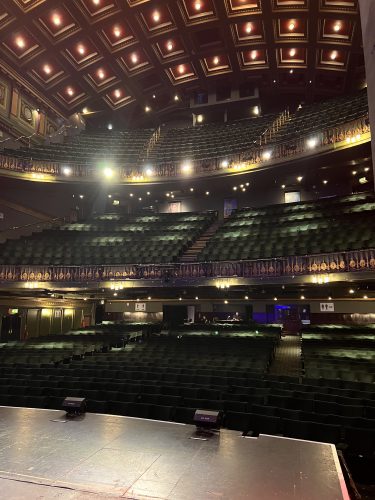
The decision was made not to make podcast recordings of these shows – you can only hear them if you were there in the room. They were live and only live (a rarity these days!). Staging YDTM – and the conversation between Greg, me as the historian and the hilarious comedians (Marjolein Robertson in Edinburgh and Shappi Khorsandi in Manchester) meant the conversation was different each time – these shows were live and alive. What made them more alive and varied was the style and size of the venue: in Edinburgh a venue for about 600 in the Queen’s Hall (originally a Georgian church!) and in Manchester the Opera House at c. 1800 people. What worked as a way of telling the story in one place did not work in the other. Even more fascinating, the audiences themselves felt, reacted and engaged in different elements of the story across the two nights, locations, on stage teams. We were always talking about Alexander the Great – but what each show highlighted, what each audience really responded to, and how the whole process felt was completely different on each occasion. And so too were the back stage dressing rooms!
This will come as no surprise to those used to live tours – and hats off to the brilliant team supporting the tour for their calm, hard work and encouragement. But it was fascinating to see how much a live audience, in one case for a recorded radio show, and in the other, taking a recorded show and making it a live and alive event, made a difference.